The Benandanti
“benandants”, those who go for good
a little scary
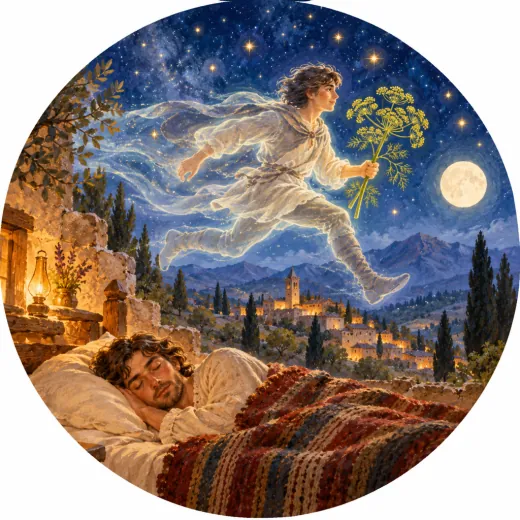
In the sixteenth and seventeenth centuries some Friulian peasants told an astonishing story: four nights a year, while their bodies slept, their spirits went out to fight against witches. They were armed with fennel stalks, the witches with sorghum canes. If the benandanti won, the harvest would be good; if the witches won, hunger would come. They were the ones “born with the caul”. We know about them because the Inquisition questioned them, and the records have come down to us.
Did you know? The historian Carlo Ginzburg told their story in the book “The Night Battles” (1966), studied all over the world.
The story
There is a truth that historians found again in an archive in Udine, among the old papers of the Inquisition. The truth is that in the Friuli of four and a half centuries ago there were peasants who were convinced they were warriors.
Not by day, of course. By day they hoed, milked, took the grain to the mill, like everybody else. But four times a year, on the nights that calendars called the Ember Days, something strange happened.
Before explaining what, we must say who they were. They were called benandanti, that is, those who "go for the good". And not just anyone became one. You were born a benandante.
It happened rarely, but it happened. Certain babies came into the world still wrapped in a thin film, the amniotic sac. Midwives said they were born "with the shirt on". For the peasants it was a sign: that child had a gift. A piece of that membrane was kept, dried, and worn as an amulet, the caulo. If someone lost it, they lost their power too. The rest was learned early, as small children, often from the mother.
And so, here is what happened on the nights of the Ember Days.
The benandante went to sleep. His body stayed there, stretched out in bed, as still as a dead man. But the spirit went out. It went out lightly, without a sound, and took the form of an animal: a mouse, a butterfly, a cat. It ran through the fields, among the hedges, under the moon. And it went to a meeting.
There its companions awaited it. And facing them, on the other side, the enemies: the malandanti, the "evil-goers". They were the witches and wizards, those who wanted to ruin the harvests and make the animals sick.
The battle began.
The benandanti fought with fennel stalks. The malandanti, with sorghum canes. Field weapons, peasants' weapons. They beat each other, they chased each other, until one of the two sides won. And the result mattered, because the year depended on it. If the benandanti won, the wheat grew, the vines filled, the stables stayed healthy. If the malandanti won, famine came.
When day returned, the benandanti woke in their beds, tired as after a real night's work. And for the rest of the year they went about their trade: they cured the evil eye, they healed spells. Some women said they could see the dead.
This story would seem a fairy tale. Instead it is documented. Because at a certain point, in Cividale, the Inquisition heard of it.
In 1575 a benandante, Paolo Gasparotto, from the village of Iassico, had given an amulet to a miller of Brazzano, Pietro Rotaro, to use to cure a sick son. The parish priest, Bartolomeo Sgabarizza, got word of it. He grew curious. He went to Cividale to speak to the inquisitor. They also heard another benandante, Battista Moduco. They listened to their stories and, in the end, judged them simple country tales. They closed the case.
It might have ended there. But in 1580 a new inquisitor arrived, Felice Passeri, a sterner one, and reopened everything.
Gasparotto, summoned, denied being a benandante. The next day he changed his mind and admitted it. Moduco, arrested, told openly what he did. But the inquisitor did not want to hear of battles for the harvest. He wanted to hear that the Devil was involved. Through questions, pressure, days spent in a cell, the two peasants ended up saying what the inquisitor wanted: that they had been deceived by the Devil.
In November 1581 they were condemned as heretics to six months in prison, then waived. They only had to stay in Cividale for fifteen days.
In the following years other benandanti were questioned: Anna la Rossa, Donna Aquilina, Caterina la Guercia, Toffolo di Buri. Little by little, according to the records, their accounts changed. The battles for the good turned, in the judges' words, into witches' sabbaths. The benandanti, who had always considered themselves the defenders of the village, became, even in their own eyes, suspected of witchcraft.
In 1649 Michele Soppe was arrested, whom they called the "captain of the benandanti". He died in prison in Udine on 20 November 1650, before the trial ended.
The cult, it seems, survived in some corners into the seventeenth century and beyond. Then it disappeared.
We would have forgotten it, had a young historian not walked, in the 1960s, into the Archiepiscopal Archive of Udine. His name was Carlo Ginzburg. He found those records. He read them. And in 1966 he wrote a book, "I benandanti", which has been translated all over the world.
What they really were, historians still debate. Ginzburg and others thought of an ancient fertility cult, born who knows how many centuries earlier. Other scholars, like Norman Cohn and Ronald Hutton, have doubts. Perhaps it was a more recent idea. Perhaps it was something simpler, born of the fear for the harvests.
But the fact remains, and it is this that sends a shiver down the spine: four centuries ago, in Friuli, there were men and women who believed they fought every year to save the fields. With a bunch of fennel in their hands. While they slept.
Relatives around the world
Listen / Read next
- Music to read by: Cinematic JourneyEpic film-style music, no lyrics, by Ciro Simone IrmiciSpotifyYouTube Music
Sources
- Carlo Ginzburg, «I benandanti. Stregoneria e culti agrari tra Cinquecento e Seicento», Einaudi (1966)
- Giovanni Pizza, AM, Rivista della Società italiana di antropologia medica (2000)
