Olodumare
Olódùmarè, in Yoruba
not scary at all
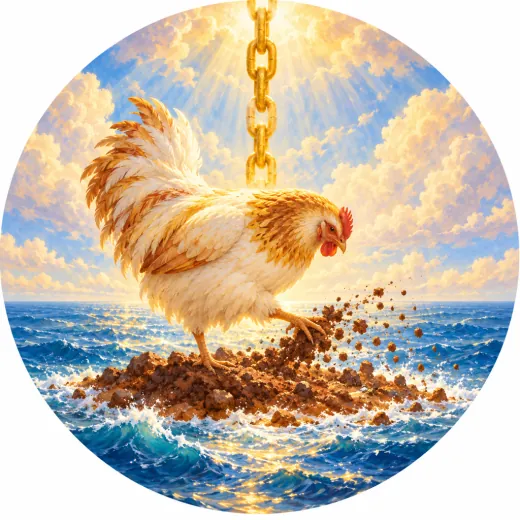
In the traditional Yoruba religion, still practised in Nigeria and Benin and, in the forms that grew up in the Americas, in Brazil and Cuba, Olodumare is the supreme being, the distant creator above everything. Olodumare has no temples or priests of its own: worship usually passes through the orishas, deities closer to everyday life, but Olodumare is called upon in prayers and proverbs, especially in hard times. One creation account says that in the beginning there was only water, and that one of the orishas, Oduduwa, came down from the sky along a chain carrying a shell full of earth and a hen, which scattered the earth and formed dry land at Ile-Ife.
Did you know? In the Yoruba tradition the city of Ile-Ife, in Nigeria, is regarded as the place where the world began.
The story
In the beginning, the Yoruba say, the world was only half made.
Above was Orun, the sky, where the orisha lived and where Olodumare dwelt. Below there was only water and mud: a grey, silent expanse where the only living thing was the mist. There were no trees, no houses, no people. No one had yet told that expanse to become land.
Olodumare is hard to describe. He has no statue, because no statue could hold him. He has no temple, because no temple could hold him. He is not a king sitting on a throne. He is the one who was there before everything and who will see the end of everything: the one above all others, the one who holds things together without being seen. So the old people say, and they say it with respect, in a low voice, the way you speak of someone who is very close.
One day, in the sky, the orisha gathered before him.
“Look at that world down below, Olodumare,” said one. “It is all water. You cannot build a house on it, you cannot plant a seed in it. What will become of it?”
Olodumare listened in silence. Then he called Obatala, the great orisha in white robes, the one who could shape things with his hands.
“Go and make the land,” he said.
He gave him four things, each with its own purpose.
One was a long chain, reaching from the sky all the way down to the world below, which would serve as his ladder. One was a snail shell (in other versions a gourd) filled with earth and tightly closed, which Obatala was to carry against his chest so that not a single grain would be lost. Then a hen, with five toes on each foot. And last of all, a palm nut.
“When you reach the bottom of the chain,” said Olodumare, “and there is no more chain, pour the earth onto the water. Then let the hen go.”
Obatala bowed and set off. But the journey was long, and the sky had many houses. On the way he passed a house where there was a celebration. They offered him palm wine, sweet and cool. He drank one cup, then another, then another.
After a while he sat down to rest for a moment. And he fell asleep.
That is how another orisha found him: Oduduwa, who happened to be passing. He saw the shell of earth on his chest, he saw the chain hanging down, he saw the hen pecking at the ground. And he understood that it was up to him.
He took the chain. He took the shell, gently, so as not to wake Obatala. He took the hen and the palm nut. And he began to climb down.
Down, down, down. The air grew thicker and thicker, the darkness damper and damper. The chain creaked, and its links knocked against one another with a sound like little bells. In the dark, Oduduwa could sense the water beneath him, but he could not see it. A doubt came over him: what if the shell held too little? What if the water swallowed it in a single gulp? But there was no turning back, and at least the chain was not shaking.
Then the chain came to an end. The last link swung in the empty air, still above the water.
It was then that Oduduwa remembered Olodumare's words. He opened the shell and poured out the earth, grain after grain, onto the surface. The mud received it with a sigh. Then he took out the hen and let it drop.
The hen landed on that little heap of sand and began to scratch, to scatter, to scrape, to stamp its feet. Wherever it scratched, the land spread out. Wherever its feet stopped, the land stopped. Soon that single heap had become a hill, then a plain, then a great wide land.
To find out whether the ground would hold, Olodumare sent down a chameleon. It was a slow and careful messenger, as all chameleons are.
It climbed down, put out one foot and then the other, and went back up to report.
“It is wide,” it said. “But it is not dry enough yet.”
After a while they sent it down a second time.
“Now it is wide and dry,” it said. “You can walk on it.”
That is how the land was born. And the place where the first grain had landed was called Ile-Ife, the House of Spreading (that is the popular explanation of the name), because everything had spread out from there. Oduduwa planted the palm nut, and from its seed grew a towering palm tree that put out sixteen branches.
Meanwhile, up in the sky, someone had watched it all without lifting a finger. Olodumare did not stop Oduduwa, and he did not wake Obatala. He waited, the way someone waits who already knows how things will end.
When Obatala woke up, he saw at once that the shell was empty.
Ashamed, he went to Olodumare with his head bowed.
“I was wrong,” he said. “I let the wine get the better of me.”
Olodumare did not raise his voice. “The task of making the world has been done,” he said, “and it does not matter by whom. But there is another task still left. The world is empty. Go and fill it.”
Obatala went down and took some clay from the soil of Ife. With his hands, and with great patience, he began to shape bodies: heads, arms, legs. He laid them out on the ground, dozens of them, and looked at his work. They were beautiful, but they did not move.
Only Olodumare could give them what was missing. From high above, softly, he breathed. It was a gentle breath, which the Yoruba call èmí. And one after another the clay figures opened their eyes, sat up and looked at the sky.
Human beings had been born. Olodumare looked at them for a moment, and no one could say what he was thinking. The Yoruba say that this breath is still in each one of us, and that this is why every person, even the smallest, carries something inside that is not theirs alone.
The old people say that once Obatala drank palm wine again while he was working, and that some of his figures came out imperfect. From that day on he took under his protection those who are born with a different body, and he forbade his followers to drink palm wine. But every figure, perfect or not, had its own breath from Olodumare.
Even today, in Ile-Ife, the descendants of those people say that the world began there. And when an elder in Nigeria raises his eyes to the sky and calls upon the Creator, he does it without images and without temples: his name is enough, and the silence that follows.
A living tradition, told with respect: how we tell myths.
Relatives around the world
Listen / Read next
- Music to read by: Cinematic JourneyEpic film-style music, no lyrics, by Ciro Simone IrmiciSpotifyYouTube Music
Sources
- E. Bolaji Idowu, Olódùmarè: God in Yoruba Belief (1962)
- Wande Abimbola, Ifá: An Exposition of Ifá Literary Corpus (1976)
