Mythology
Japanese mythology
The oldest Japanese myths are collected in the Kojiki, written in 712, and they tell how the deities, the kami, created the islands of Japan. Shinto, the religion of the kami, is still alive, and that is why we present its deities with respect. Alongside them are the yōkai of folklore: magic foxes, river spirits, objects that come to life, which the Japanese have drawn and told about for centuries and which today also appear in comics and cartoons.
A living religious tradition: its deities are described with respect, as revered figures. How we tell myths.
Who they were, where, and how we know
Japanese myths come from the Shinto religion, the «way of the kami», in which spirits and gods live in mountains, trees, rivers and even objects. Shinto is alive today: the shrines with red gates, the torii, are real places of worship.
The oldest stories were written down in the early 8th century: the «Kojiki» (712 AD) and the «Nihon Shoki» (720). They tell how Izanagi and Izanami created the islands and how the sun goddess Amaterasu was born. Then there are folk tales collected over the centuries, with creatures called yōkai: tengu, kappa, oni, kitsune.
The main gods are Amaterasu, the sun; Susanoo, the stormy one; Izanami and Izanagi. The folk legends are more recent and more varied, sometimes frightening, sometimes funny.
The cards
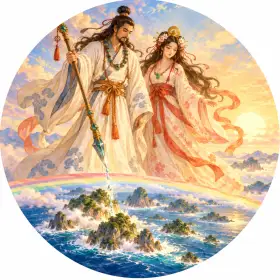 Izanagi and Izanamithe islands of Japan · creator couple a little scary
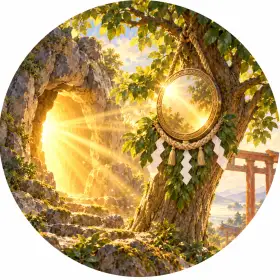 AmaterasuIse · sun deity not scary at all
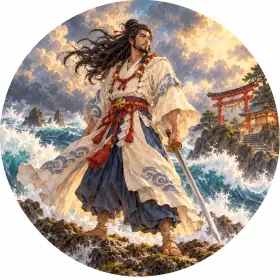 SusanooIzumo · storm deity a little scary
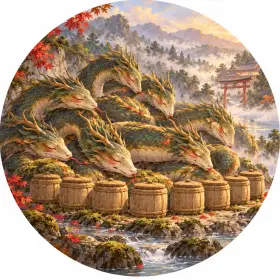 Yamata no OrochiIzumo · giant serpent scary
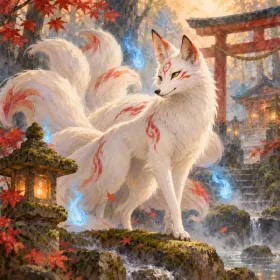 KitsuneJapan · magic foxes a little scary
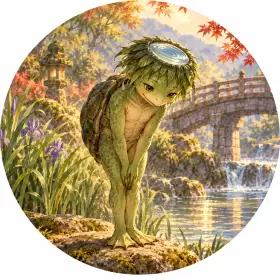 Kappathe rivers and ponds of Japan · river spirits a little scary
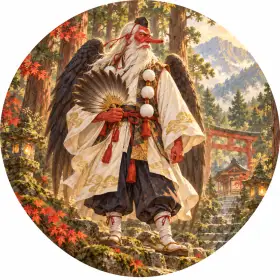 Tenguthe mountains of Japan · mountain spirits a little scary
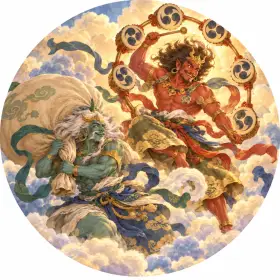 Raijin and Fūjinthe skies of Japan · thunder deity a little scary
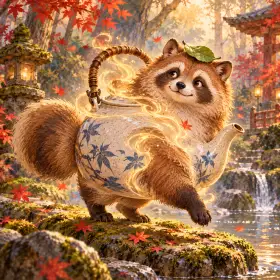 Tanukithe countryside and woods of Japan · prankster animals not scary at all
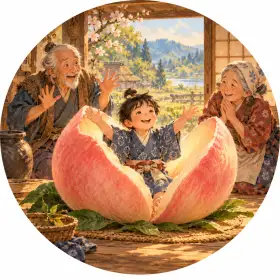 MomotarōOkayama · fairy-tale hero not scary at all
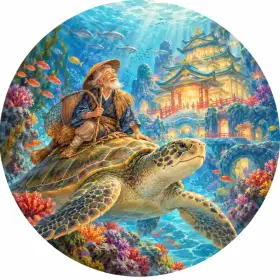 Urashima TarōTango, on the Sea of Japan · fisherman a little scary
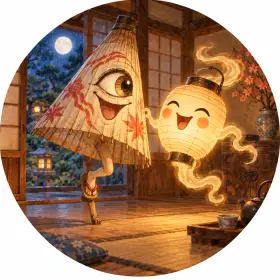 Tsukumogamithe homes of Japan · living objects not scary at all
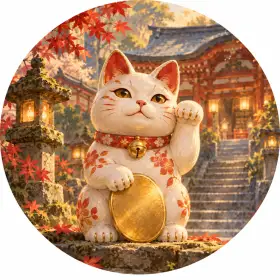 Maneki-nekoTokyo · lucky cat not scary at all
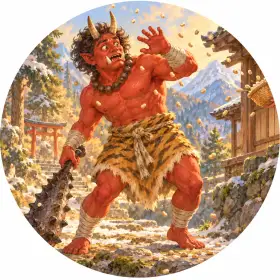 Onithe mountains and faraway islands of Japan · Japanese ogres scary
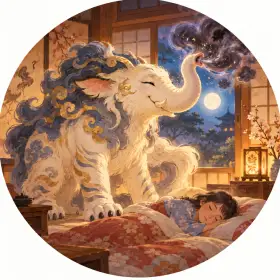 BakuJapan (and China before it) · eater of nightmares not scary at all
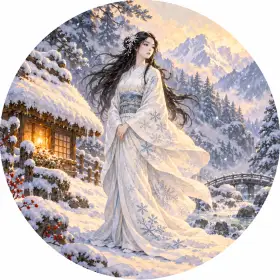 Yuki-onnathe snowy mountains of Japan · snow woman scary
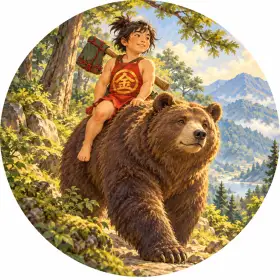 KintarōMount Ashigara, Japan · the super-strong boy not scary at all
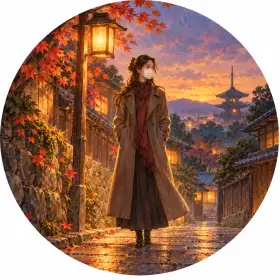 Kuchisake-onnathe cities of Japan · urban legend very scary
Who comes from whom
Tap a name: its parents and children light up. Names with a medallion open their card (with a finger: tap them twice).
Places of the myths
- The floating bridge of heaven
- from where Izanagi and Izanami stirred the sea to create the first island.
- Ise
- the most important shrine dedicated to Amaterasu.
- Izumo
- the region where Susanoo defeated the eight-headed serpent.
- The palace of the Dragon King
- the palace at the bottom of the sea visited by Urashima Tarō.
Main sources
- Kojiki (712)
- Nihon Shoki (720)
- Kunio Yanagita, Tōno Monogatari (1910)
- Michael Dylan Foster, The Book of Yōkai (2015)
GreekRomanNorseEgyptianCelticMesopotamianHinduChineseAztec and MayaAfricanPolynesianAboriginalSlavic

Who's behind this
Ciro Simone Irmici
I build websites, apps and games. I built the Atlas with artificial intelligence and I check every card and every source myself. I am not a scholar of mythology: I tell these legends with respect and always say where they come from. If you know a legend from your town, write to me.
More of my work: free audiobooks on YouTube · ebooks on Gumroad · Apple Books · music on Spotify and YouTube Music